In today’s interconnected world, the ability to adapt seamlessly across cultures and contexts has become essential for success in virtually every professional domain.

As globalization continues to reshape our personal and professional landscapes, understanding how to navigate cultural nuances while maintaining authenticity has evolved from a nice-to-have skill to a fundamental requirement. Domain adaptation—the process of adjusting knowledge, behaviors, and communication styles to fit different cultural contexts—stands at the intersection of emotional intelligence, cultural awareness, and practical application.
Whether you’re a business professional expanding into international markets, a digital nomad working across continents, or simply someone who values meaningful cross-cultural connections, developing cultural fluency opens doors that would otherwise remain closed. This comprehensive exploration will guide you through the essential principles, practical strategies, and transformative insights needed to master domain adaptation in our increasingly diverse world.
🌍 Understanding the Foundation of Cultural Fluency
Cultural fluency goes far beyond memorizing customs or learning basic phrases in different languages. It represents a deep, intuitive understanding of how cultural contexts shape thinking patterns, decision-making processes, and interpersonal dynamics. When we talk about domain adaptation in cultural contexts, we’re referring to the sophisticated ability to recognize cultural frameworks and adjust our approach accordingly without losing our authentic self.
The foundation of cultural fluency rests on three interconnected pillars: cultural awareness, adaptive thinking, and contextual intelligence. Cultural awareness involves recognizing that your worldview is shaped by your own cultural background and that other perspectives are equally valid. Adaptive thinking enables you to shift mental models based on the situation at hand. Contextual intelligence allows you to read environmental cues and understand the unspoken rules governing different cultural spaces.
Research in cross-cultural psychology demonstrates that individuals with high cultural fluency show increased cognitive flexibility, better problem-solving abilities, and enhanced creativity. These benefits extend beyond international interactions—they improve communication effectiveness in diverse domestic settings as well.
The Mechanics of Domain Adaptation Across Cultures
Domain adaptation operates on multiple levels simultaneously. At the surface level, it involves adjusting visible behaviors—how we greet people, maintain eye contact, or structure conversations. The middle layer encompasses communication styles, including directness, formality, and emotional expression. The deepest level involves understanding fundamental value systems that shape how different cultures perceive concepts like time, hierarchy, individualism, and success.
Consider how business negotiations differ across cultures. In high-context cultures like Japan or Korea, relationship-building precedes any discussion of business terms, and indirect communication preserves harmony. Conversely, in low-context cultures like Germany or the United States, direct communication and efficiency are valued, with relationships developing alongside business transactions rather than before them.
Effective domain adaptation requires recognizing these patterns without resorting to stereotypes. While cultural generalizations provide useful starting points for understanding, truly fluent individuals recognize the immense diversity within any cultural group and remain flexible in their approach.
Building Your Cultural Intelligence Framework 🧠
Developing cultural intelligence (CQ) is central to mastering domain adaptation. This multi-dimensional capability consists of four key components that work together to enable effective cross-cultural functioning.
CQ Drive represents your motivation and confidence to engage with cultural differences. This intrinsic interest fuels the learning process and helps you persist through inevitable moments of confusion or discomfort. People with high CQ Drive view cultural encounters as opportunities for growth rather than threats to their comfort zone.
CQ Knowledge encompasses your understanding of how cultures differ and how these differences manifest in behaviors, values, and systems. This includes frameworks like Hofstede’s cultural dimensions, Hall’s context theory, and Trompenaars’ cultural dilemmas. However, book knowledge alone remains insufficient—it must be combined with lived experience.
CQ Strategy involves the metacognitive processes you use when encountering cultural differences. This means planning for cross-cultural interactions, checking your assumptions during encounters, and reflecting afterward to extract lessons. Strategic thinking prevents autopilot responses that might be culturally inappropriate.
CQ Action represents your ability to adapt verbal and non-verbal behaviors appropriately. This includes modifying speech patterns, gestures, facial expressions, and even your use of space and time. The key lies in making these adaptations feel natural rather than forced or inauthentic.
🗣️ Mastering Communication Across Cultural Boundaries
Communication forms the backbone of cultural fluency, yet it’s also where cultural misunderstandings most frequently occur. Effective cross-cultural communication requires awareness of both explicit message content and implicit contextual meaning.
Language proficiency certainly helps, but even when speaking the same language, cultural differences shape communication in profound ways. For instance, the word “yes” carries vastly different implications across cultures. In some contexts, it signals definitive agreement; in others, it merely acknowledges that the message was heard; in still others, it represents a polite way to avoid saying “no” directly.
Silence operates differently across cultures as well. Western cultures often interpret silence as awkwardness requiring filling, while many Asian cultures view silence as a space for reflection and respect. Understanding these nuances prevents the common mistake of over-talking in contexts where restraint would be more appropriate.
Non-verbal communication carries equal weight. Gestures considered positive in one culture may be offensive in another. Personal space preferences vary dramatically—what feels friendly in Latin America might feel invasive in Scandinavia. Even something as simple as nodding doesn’t universally signal agreement; in some cultures, it simply indicates attentiveness.
Navigating Professional Contexts with Cultural Sensitivity
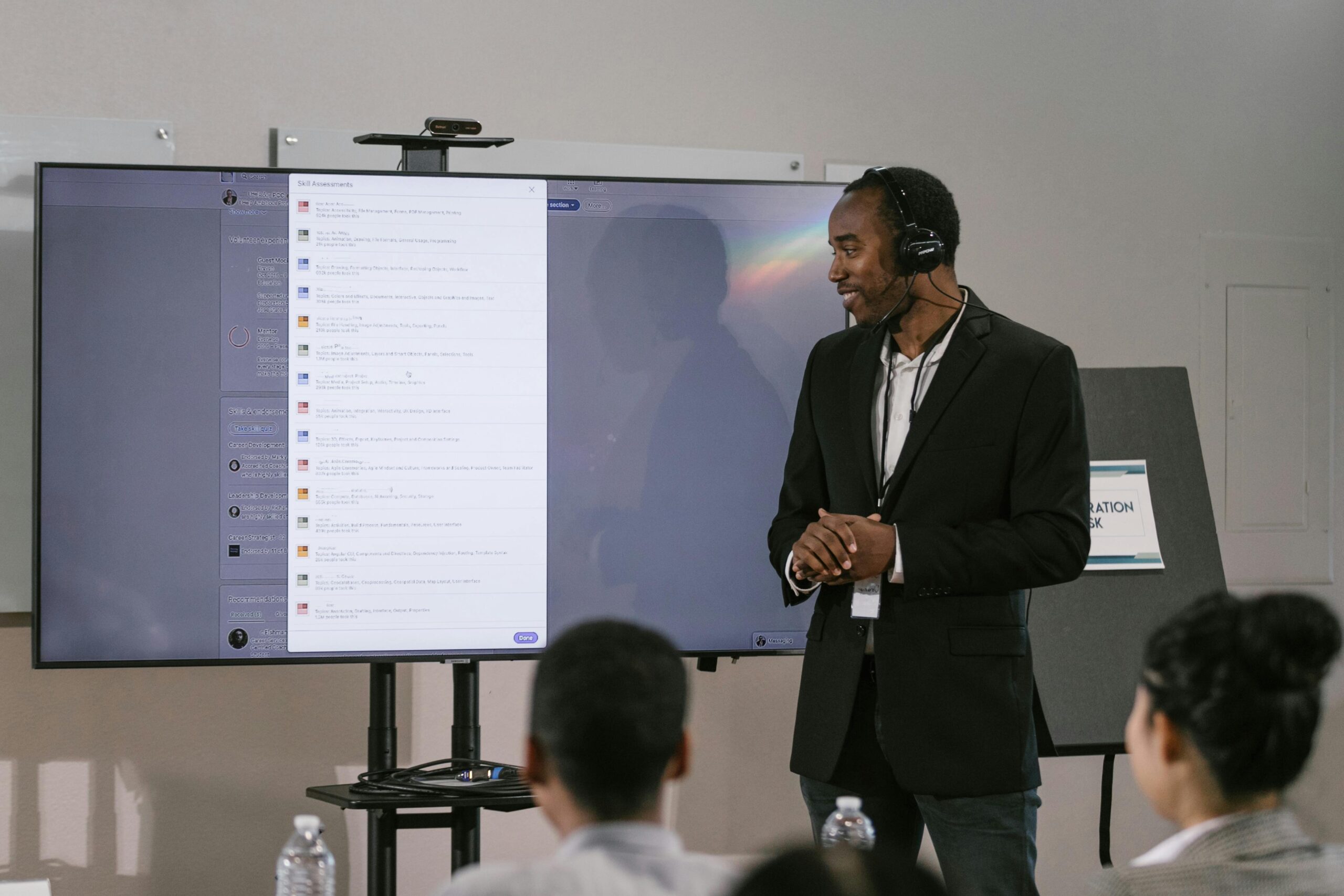
The workplace represents one of the most critical domains for cultural adaptation. As organizations become increasingly global and diverse, the ability to work effectively across cultural lines directly impacts career success and organizational performance.
Leadership styles must adapt to cultural contexts. Transformational leadership approaches that work brilliantly in individualistic cultures may fall flat in collectivist environments where harmony and group consensus take precedence. Similarly, flat organizational structures common in Nordic countries might create confusion in cultures with strong hierarchical orientations.
Meeting protocols vary significantly across cultures. German business culture values punctuality and structured agendas with strict time adherence. Indian business contexts often incorporate relationship-building and may be more flexible with timing. Arab business culture might interweave personal and professional matters in ways that Western cultures typically separate.
Feedback delivery requires particular sensitivity. Anglo-Saxon cultures generally prefer direct feedback sandwiched between positive comments. Many Asian cultures favor much more indirect approaches that preserve face and maintain harmony. Latin cultures might deliver feedback in emotionally expressive ways that seem excessive to more reserved cultures.
⚡ Digital Tools Supporting Cross-Cultural Connection
Technology has simultaneously made cross-cultural interaction more necessary and more accessible. Various digital platforms now facilitate cultural learning and adaptation in ways previously impossible.
Language learning applications have revolutionized how we acquire linguistic skills. These platforms use spaced repetition, gamification, and AI-powered conversation practice to accelerate learning. However, remember that language is just one component of cultural fluency—understanding cultural context remains equally important.
Virtual reality experiences increasingly offer immersive cultural simulations that allow users to practice navigating culturally complex scenarios in safe environments. These tools provide valuable practice opportunities without the high stakes of real-world cultural missteps.
Cultural intelligence assessment tools help individuals benchmark their current CQ levels and identify specific areas for development. These assessments measure the four CQ dimensions and provide personalized development recommendations.
Overcoming Common Challenges in Cultural Adaptation
Even with strong intentions and growing awareness, mastering domain adaptation presents several predictable challenges. Recognizing these obstacles helps you prepare strategies to overcome them.
Ethnocentrism—the tendency to view your own culture as superior or “normal”—represents perhaps the most fundamental barrier. We all carry cultural programming that operates largely outside conscious awareness. The first step in overcoming ethnocentrism involves recognizing that your cultural lens is just one of many valid perspectives on reality.
Stereotype reliance offers another significant pitfall. While cultural generalizations provide useful starting points, treating them as definitive truths about individuals leads to misunderstanding and offense. Effective cultural adaptation balances cultural knowledge with individual openness, adjusting expectations based on the specific person rather than predetermined assumptions.
Adaptation fatigue occurs when the constant effort of cross-cultural navigation becomes exhausting. Living or working in culturally unfamiliar environments requires sustained mental energy. Building in recovery time, connecting with cultural familiarity periodically, and developing a support network helps manage this challenge.
Identity concerns sometimes emerge during deep cultural adaptation. People worry about losing their authentic self or “becoming someone else” through cultural adjustment. In reality, cultural fluency involves expanding your behavioral repertoire, not replacing your core identity. Think of it as becoming multilingual rather than abandoning your native language.
🌟 Developing Cultural Fluency Through Deliberate Practice
Like any sophisticated skill, cultural fluency develops through intentional practice over time. Several evidence-based strategies accelerate this development process.
Seek diverse experiences actively rather than waiting for them to happen. Travel certainly helps, but meaningful engagement matters more than passport stamps. Volunteer with immigrant communities, join international professional associations, or participate in cultural exchange programs. Each genuine cross-cultural encounter provides learning opportunities.
Develop cultural mentors from different backgrounds. These relationships provide insider perspectives that external observation cannot reveal. A cultural mentor can explain the “why” behind behaviors, help you interpret ambiguous situations, and provide feedback on your adaptation efforts.
Practice reflective observation consistently. After cross-cultural interactions, take time to reflect on what happened, what surprised you, what worked well, and what you might do differently next time. This metacognitive process transforms experiences into learning.
Study cultural frameworks systematically. While lived experience remains essential, theoretical frameworks help you organize observations and recognize patterns. Understanding concepts like power distance, uncertainty avoidance, and polychronic versus monochronic time orientations provides mental models for making sense of cultural differences.
Embrace discomfort as a signal of growth. Cultural learning inevitably involves moments of confusion, embarrassment, or offense—both given and received. Rather than avoiding these situations, view them as valuable data points for development. The discomfort indicates you’re pushing beyond your current capabilities.
The Business Case for Cultural Fluency in Modern Organizations
Organizations increasingly recognize cultural fluency as a competitive advantage rather than merely a nice-to-have soft skill. Companies operating in global markets require leaders and teams who can navigate cultural complexity effectively.
Market expansion success correlates strongly with cultural intelligence. Products and services that succeed domestically often fail internationally when companies ignore cultural adaptation. McDonald’s succeeds globally not by replicating the American model everywhere but by adapting menus, service styles, and marketing to local preferences while maintaining core brand elements.
Innovation benefits from cultural diversity when teams possess the fluency to leverage different perspectives effectively. Research consistently shows that diverse teams outperform homogeneous ones in creative problem-solving—but only when team members have sufficient cultural intelligence to work through the challenges that diversity introduces.
Talent acquisition and retention depend increasingly on inclusive, culturally intelligent environments. Top performers increasingly prioritize working for organizations that value diversity and demonstrate genuine cultural competence. Companies lacking cultural fluency find themselves at a disadvantage in competitive talent markets.

🎯 Moving Forward: Your Cultural Fluency Journey
Mastering domain adaptation for diverse contexts and cultures represents a lifelong journey rather than a destination. The goal isn’t perfection but rather continuous improvement and genuine engagement across difference.
Start by conducting an honest self-assessment of your current cultural fluency. Where do you feel confident? Where do you experience discomfort or confusion? What cultural contexts remain unfamiliar to you? This baseline awareness provides direction for focused development.
Set specific, measurable goals for cultural learning. Rather than vague aspirations to “become more culturally aware,” commit to concrete actions like reading books from authors of different cultural backgrounds, learning conversational phrases in a new language, or initiating relationships with colleagues from different cultures.
Remember that cultural fluency develops through accumulation of many small actions rather than dramatic transformations. Each conversation with someone from a different background, each moment of curiosity about unfamiliar customs, and each instance of adapting your approach contributes to your overall development.
The ability to adapt fluidly across cultures represents one of the most valuable capabilities in our interconnected world. It opens professional opportunities, enriches personal relationships, and expands your understanding of human experience. More importantly, cultural fluency contributes to a more inclusive, understanding, and collaborative global community.
As you continue developing your cultural intelligence and adaptive capabilities, remember that the journey itself—with its moments of discovery, confusion, connection, and growth—represents the real reward. Each cross-cultural bridge you build makes the world a little smaller and a little more understanding. In mastering domain adaptation, you’re not just advancing your own capabilities; you’re contributing to a more culturally fluent future for everyone. 🌏✨